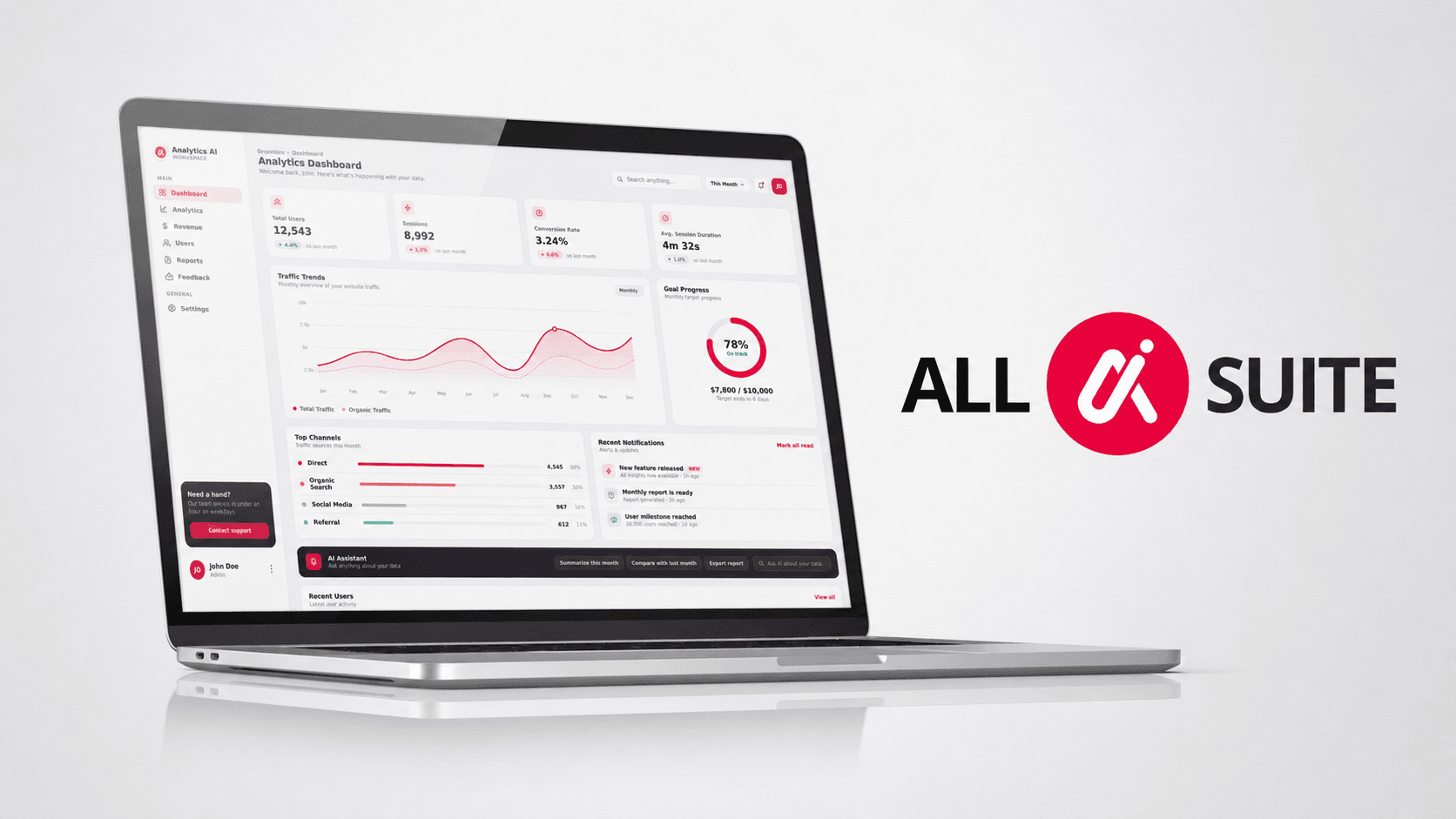
We compared 10 AI proposal software tools on draft quality, RFP coverage, integrations, and pricing to help you pick the right one for your team.
On this page
A proposal is often the last thing a prospect reads before they decide whether to sign. Get it out fast and it can still lose the deal if the pricing table is wrong, the case study is stale, or the formatting looks like it was assembled at midnight. Get it out slow and a faster competitor closes first. That tension is exactly what AI proposal software is built to remove.
The category has moved well past "template plus e-signature." The best AI proposal software today drafts from your own past proposals and product data, pulls live pricing and account context from your CRM, and checks a response against the actual requirements in an RFP before it goes out. Some tools are AI-native from day one; others bolted AI onto a mature content-library platform. Both approaches can work, but they fit very different teams.
This guide compares 10 AI proposal software and proposal automation tools across pricing, features, and who each one is genuinely built for — starting with AllAI Outbound, which connects proposal and RFP drafting directly to the pipeline data your sales team is already working from.
Quick Answer
The best AI proposal software for most sales teams in 2026 is AllAI Outbound, because it drafts proposals and RFP responses directly from live CRM and pipeline data instead of a separate content library. For dedicated enterprise RFP workflows, Loopio and Responsive have the deepest content-library and integration coverage. For fast, transparently priced AI drafting, Bidara and AutoRFP.ai are the strongest AI-native options. For simple, branded sales proposals without RFP complexity, Proposify, Better Proposals, and Qwilr cover small and mid-size teams well.
In This Guide
• How We Evaluated These AI Proposal Tools
• AI Proposal Software 2026: Comparison Table
• 1. AllAI Outbound
• 2. PandaDoc
• 3. Loopio
• 4. Bidara
• 5. Proposify
• 6. Responsive
• 7. Qwilr
• 8. AutoRFP.ai
• 9. Better Proposals
• 10. GetAccept
• How to Choose AI Proposal Software
• Frequently Asked Questions
• The Bottom Line
How We Evaluated These AI Proposal Tools
Every platform on this list was evaluated against four criteria that matter most once a proposal software or proposal builder software purchase moves past the demo stage:
• AI draft quality: whether the tool generates original, on-brand content grounded in your own documents, or just fills in a template with your name swapped in.
• Proposal and RFP lifecycle coverage: how much of the process is supported, from first draft through compliance checking, e-signature, and CRM sync.
• Pricing transparency: whether pricing is published or gated behind a sales call, since that alone rules tools in or out for smaller teams.
• Integration depth: native, working connections to the CRM, document, and communication tools a sales team already runs on.
We relied on vendor documentation, published pricing pages, and independently verified user reviews rather than vendor claims alone. AllAI Outbound is included and disclosed as AllAI Suite's own product; every other placement reflects the same four criteria applied consistently across the category of proposal automation tools.
AI Proposal Software 2026: Features and Comparison
1. AllAI Outbound
AllAI Outbound
AllAI Outbound is AllAI Suite's AI SDR and revenue platform, and its proposal and RFP module is built to solve a specific problem: proposal content and pipeline data usually live in different systems, so reps spend as much time reconciling the two as they do actually writing. AllAI Outbound keeps proposal generation inside the same workspace as prospecting, outreach, and CRM activity, so a proposal reflects the live state of the deal instead of a snapshot from whenever the template was last updated.
Full capability breakdown:
• AI-generated proposal and RFP drafts pulled from a connected knowledge-base panel of past proposals, case studies, and product documentation.
• Automatic requirement extraction from uploaded RFPs and RFQs, so nothing in the solicitation gets missed in the response.
• Live pricing, deal stage, and account context pulled directly from AllAI CRM and AllAI Pipeline instead of manual entry.
• Document intelligence for ingesting and summarizing dense RFP attachments before drafting begins.
• Human-in-the-loop review and approval workflow before any proposal or RFP response goes out.
• Full audit logging of every draft, edit, and send for compliance and reporting.
Why AllAI Outbound fits
Most proposal software treats proposal writing as a document task that happens to touch a CRM. AllAI Outbound treats it as a pipeline task that happens to produce a document. Because AllAI Outbound is already tracking the account, the contact, and the deal stage as part of outbound and sales intelligence, the proposal draft starts from real, current deal data rather than a rep re-typing it. For revenue teams already running prospecting and outreach through AllAI Outbound, this removes an entire handoff between the CRM and a separate proposal tool.
Custom setup
Because proposal and RFP formats, approval workflows, and compliance requirements vary widely by industry, AllAI Outbound's proposal module is configured during onboarding rather than shipped as a one-size-fits-all template. The AllAI Suite team maps your existing proposal structure, content library, and approval chain into the platform, so the AI is drafting in your voice and against your actual requirements from the first proposal, not a generic starting point.
Pros:
• Proposal and RFP drafting connected directly to live CRM and pipeline data, not a separate content silo.
• Requirement extraction and human approval built into one workflow, reducing missed RFP requirements.
• Part of the broader AllAI Suite platform, so outbound, CRM, and proposal generation share one system of record.
Cons:
• Best suited to teams already using or adopting AllAI Outbound for pipeline and outreach, rather than as a standalone proposal tool.
• Custom setup means a short onboarding period before the AI is fully mapped to your content library.
Pricing: Custom, solution-specific pricing.
See how AllAI Outbound compares →
2. Best for Proposals, Quotes, and Contracts in One Workflow
PandaDoc
PandaDoc is a document workflow platform built around the idea that proposals, quotes, and contracts shouldn't live in separate tools. Its content library, CPQ, and legally binding e-signatures cover the full document lifecycle, and its native integrations with Salesforce, HubSpot, and Pipedrive keep deal data flowing in both directions.
Key features:
• Drag-and-drop content library with reusable templates for proposals, quotes, and contracts.
• CPQ (configure-price-quote) tools on the Enterprise plan for complex pricing.
• Legally binding, ESIGN- and UETA-compliant e-signatures.
• Native CRM integrations with Salesforce, HubSpot, and Pipedrive.
Pros:
• Consolidates proposals, quotes, and contracts in one platform instead of three.
• Wide, well-documented CRM and payment integrations.
• Large, mature user base with strong review volume on G2.
Cons:
• Interface can feel heavy for teams that only need simple proposals.
• AI drafting is template-based rather than generating original content from your documents.
• Cost scales quickly per user as a team grows.
Pricing: From $19/user/month (Starter); Business plan from $49/user/month.
3. Best for Enterprise RFP Response Teams
Loopio
Founded in 2014, Loopio is one of the most established names in RFP response software. Its centralized answer library, workflow management, and integrations across Salesforce, SharePoint, and Microsoft Teams are genuinely mature, and its Chrome extension for direct RFx portal submissions is a real differentiator for teams handling high volumes of questionnaires.
Key features:
• Centralized answer library with AI content suggestions.
• Workflow management and role-based permissions for large proposal teams.
• Chrome extension for submitting directly through RFx portals.
• Deep integrations with Salesforce, SharePoint, Microsoft Teams, and Seismic.
Pros:
• Strongest content-library and integration depth in this category for enterprise teams.
• Large, verified user base with a proven track record.
• Broad support for questionnaires and security due-diligence documents.
Cons:
• AI works best once a well-maintained content library exists, which takes weeks to build.
• No published pricing; enterprise sales process required.
• Lifecycle coverage is response-stage only, not full proposal drafting from scratch.
Pricing: Enterprise pricing; contact Loopio for a quote.
4. Best for AI-Native Drafting with Transparent Pricing
Bidara
Bidara is an AI-native proposal and RFP platform built to skip the weeks of content-library setup that legacy tools require. Teams upload past proposals and company documents, and the AI generates a structured, submission-ready draft the same day. Its published, flat pricing is a genuine differentiator in a category where most vendors gate cost behind a sales call.
Key features:
• AI draft generation grounded in uploaded company documents and past proposals.
• RFP-aware generation that reads the solicitation and tailors sections to evaluation criteria.
• Automatic requirement extraction into a reviewable, approvable list.
• Flat, published per-plan pricing with a 5-day free trial.
Pros:
• Same-day setup with no content library required upfront.
• Transparent, published pricing at accessible tiers.
• AI-native architecture avoids the legacy content-library bottleneck.
Cons:
• Newer platform (founded 2025) with a shorter track record than legacy tools.
• Fewer third-party integrations than established enterprise platforms.
• Annual billing only.
Pricing: Starter from $299/month; Growth from $599/month.
5. Best for Proposal Analytics and Branded Design
Proposify
Proposify focuses on giving sales teams control and visibility over branded, professional proposals, with engagement analytics that show exactly how a prospect interacts with a document. It pulls data directly from a connected CRM to reduce manual pricing and formatting errors, and its approval workflows help standardize what reps are allowed to send.
Key features:
• Drag-and-drop, design-friendly templates for on-brand proposals.
• Real-time engagement tracking, including time spent per section.
• CRM data pull-through to reduce manual pricing and formatting errors.
• Approval workflows to standardize pre-approved content across a team.
Pros:
• Strong analytics and pipeline visibility for managers standardizing the process.
• Mature, stable platform trusted by mid-size and enterprise sales teams.
• Good fit for agencies and consultancies with repeatable proposal formats.
Cons:
• Design and UX feel dated compared to newer, AI-native tools.
• Less flexibility in automating what happens after a proposal is sent.
• AI capabilities are limited relative to purpose-built AI proposal software.
Pricing: From $29/month.
6. Best for Large, Multi-Contributor RFP Workflows
Responsive
Responsive (formerly RFPIO) built its reputation on content management, integrations, and project dashboards for enterprise teams coordinating many contributors across multiple RFPs at once. Its TRACE Score system evaluates AI response quality, and its AI Writing Agent generates new content on top of a mature content-management foundation.
Key features:
• AI Writing Agent for generating personalized first drafts from a governed knowledge base.
• TRACE Score system for evaluating AI response quality and citation accuracy.
• Salesforce, Microsoft 365, Google Workspace, and Slack integrations.
• Go/no-go analysis agents that flag coverage gaps before a team commits time.
Pros:
• Strong workflow coordination for large, multi-contributor teams.
• Excellent integration ecosystem across CRM and productivity tools.
• Content reuse and governance tools are mature and well-documented.
Cons:
• Not fully AI-native; content library setup is still required before AI is useful.
• No published pricing; sales-led implementation can run into five figures annually.
• Steeper learning curve for smaller teams without dedicated proposal staff.
Pricing: Custom, contact for quote.
7. Best for Interactive, Web-Based Proposals
Qwilr
Qwilr replaces the static PDF with a clean, interactive web page that adjusts across devices, letting prospects sign, pay, and interact with a proposal in one place. Its modular content blocks and dynamic, CRM-connected pricing tables make it a strong fit for SaaS companies and agencies that want proposals to feel like part of the product experience.
Key features:
• Modular, responsive web-based proposal pages instead of static documents.
• Embedded e-signature and payment blocks directly inside the proposal.
• Dynamic pricing tables with conditional logic, pulling SKUs from a connected CRM.
• Real-time analytics on views, interactions, and time spent per section.
Pros:
• Modern, mobile-friendly web-based experience that stands out from static PDFs.
• Reusable content blocks make managing templates easy at scale.
• Strong integrations with Salesforce, HubSpot, and Slack.
Cons:
• More visual and design-focused than workflow- or compliance-focused.
• Limited post-signature automation compared to full document-workflow platforms.
• Not ideal for teams that need heavy approval chains or contract management.
Pricing: From $35/user/month.
8. Best for Structured RFPs at Volume
AutoRFP.ai
AutoRFP.ai is an AI-powered RFP response tool built for technology companies and sales teams handling a high volume of structured RFPs and security questionnaires. Its project-based pricing avoids per-seat costs for teams with many occasional contributors, and it publishes its pricing rather than gating it behind a sales call.
Key features:
• AI draft generation from a connected knowledge base.
• Compliance matrix support for structured RFP and questionnaire responses.
• Document management, version control, and audit trail.
• Project-based pricing with unlimited users on every plan.
Pros:
• Project-based pricing avoids seat-count penalties as a team grows.
• Published pricing, unusual for this segment of the category.
• Practical fit for technology-sector RFPs and structured questionnaires.
Cons:
• Built around generation speed rather than deep compliance or evaluation quality.
• Content library still requires manual maintenance to stay current.
• Not suited to complex narrative proposals or regulated government environments.
Pricing: Scale plan from $899/month (24 projects/year); Elite from $1,299/month.
9. Best for Small Businesses and Freelancers
Better Proposals
Better Proposals is built for freelancers, agencies, and small service businesses that need to send professional, on-brand proposals quickly without a design or IT team. Its guided send-out flow, live chat, and built-in e-signature and payment support cover the essentials without the setup overhead of enterprise platforms.
Key features:
• Clean, conversion-focused templates with a guided send-out flow.
• Built-in digital signatures and payment collection.
• Live chat inside the proposal for real-time prospect questions.
• CRM and Zapier integrations for basic automation.
Pros:
• Easy to learn with a fast, no-code setup for non-technical teams.
• Templates are well-optimized for visual impact and mobile viewing.
• Lowest published starting price in this comparison.
Cons:
• Limited automation and conditional logic for more complex sales workflows.
• Fewer native CRM connections than larger competitors.
• Not built for structured RFP or questionnaire response work.
Pricing: From $13/user/month.
10. Best for a Digital Sales Room with CRM Sync
GetAccept
GetAccept is a Digital Sales Room platform that treats the proposal as one part of a broader buyer experience, alongside live chat, video, and e-signature. Its two-way CRM integrations mean interactions inside the document — like a signature — can automatically move a deal forward in the CRM without manual updates.
Key features:
• Content editor supporting video, links, and images inside proposals.
• Live chat for real-time prospect questions during the review.
• Two-way CRM integration with Salesforce, Microsoft Dynamics, HubSpot, and Pipedrive.
• CPQ and contract management alongside core proposal features.
Pros:
• Strong, native CRM integrations that sync activity in both directions.
• Real-time engagement tracking and buyer analytics.
• Live chat built directly into the document experience.
Cons:
• Broader feature set may be more than very small teams need.
• AI drafting is lighter than purpose-built AI-native proposal tools.
Pricing: From $49/month.
How to Choose AI Proposal Software
The right proposal builder software depends less on feature checklists and more on what your team is actually responding to. A short, unsolicited sales proposal has almost nothing in common with a 100-page government RFP, and buying for the wrong one wastes both budget and setup time.
Start with what you're responding to
If you're writing unsolicited pitches, quoting a price, and chasing a signature, tools built around branded design and e-signature — Proposify, Better Proposals, Qwilr, GetAccept — fit that job well. If you're answering a solicitation someone sent you, RFP-focused platforms with requirement extraction and compliance checking, like Loopio, Responsive, Bidara, and AutoRFP.ai, are built for that instead. AllAI Outbound spans both, since it's designed to move from prospecting straight into proposal drafting on the same pipeline data.
Weigh AI-first against AI-added
Tools built AI-first from day one — AllAI Outbound, Bidara, AutoRFP.ai — tend to generate usable drafts on day one, since the AI is core to how the product works rather than a feature layered onto an existing content library. Legacy platforms that added AI later, like Loopio and Responsive, generally need weeks of content-library setup before that AI becomes genuinely useful. Neither approach is wrong, but knowing which one you're evaluating changes how much setup time to budget for.
Using AI for proposal writing responsibly
Using AI for proposal writing works best as a way to speed up the first draft, not to replace a reviewer's judgment entirely. The strongest AI proposal software still routes every draft through a human approval step before it goes out, checks specific pricing and legal language by hand, and treats the AI's output as a starting point grounded in your own documents rather than a finished, submission-ready file. Proposal writing AI is only as reliable as the source material it drafts from, so a well-maintained content library or knowledge base matters more than which model is doing the writing.
Check pricing transparency before you demo
Only a handful of platforms in this category publish real pricing. If a vendor won't share a number before a sales call, budget extra time for negotiation and factor that into your evaluation timeline — it's often a signal of how sales-led the rest of the relationship will be.
The Bottom Line
There isn't a single best AI proposal software for every team — there's a best fit for what you're responding to and how your pipeline data already lives. Teams that want proposal drafting tied directly to live CRM and pipeline activity get the most value from AllAI Outbound. Dedicated enterprise RFP teams with the time to build a content library get more from Loopio or Responsive. Teams that want fast, transparently priced AI drafting without weeks of setup should start with Bidara or AutoRFP.ai. And teams sending straightforward sales proposals, not formal RFP responses, are well served by Proposify, Better Proposals, Qwilr, or GetAccept.
See how AllAI Outbound compares on proposal and RFP drafting →
Book a demo of AllAI Outbound →
Related reading:
• Best GTM AI Tools for Sales Teams in 2026
• AI Sales Coach vs Traditional Sales Enablement Tools
• What Is AI Sales Intelligence? A Complete Guide
Ready to see how AllAI Outbound compares?
Book a demo → | Explore AllAI Outbound → | View pricing →
Frequently asked questions
What is the best AI proposal software?
The best AI proposal software depends on what you're responding to. AllAI Outbound is the strongest fit for sales teams that want proposal and RFP drafting connected directly to live CRM and pipeline data. Loopio and Responsive lead for enterprise teams with dedicated RFP staff and an established content library. Bidara and AutoRFP.ai are the strongest AI-native options with transparent, published pricing.
What is the best AI tool for sales proposals specifically, rather than RFP responses?
For unsolicited sales proposals rather than formal RFP responses, Proposify, Better Proposals, Qwilr, and GetAccept are purpose-built around branded design, e-signature, and buyer engagement tracking rather than compliance-matrix and requirement-extraction features that RFP-focused tools carry.
Are there any best AI-driven proposal generation solutions with transparent pricing?
Yes. Among the best AI-driven proposal generation solutions, Bidara and AutoRFP.ai both publish flat or project-based pricing rather than gating cost behind a sales call, which is unusual in a category where most enterprise platforms require a demo before disclosing a number.
Do AI proposal tools replace manual review?
No. Even the most AI-native platforms route every draft through a human approval step before it goes out. AI proposal tools remove most of the manual drafting and formatting work, not the judgment needed to check pricing, legal language, and tone before a proposal reaches a prospect.
What's the difference between proposal software and RFP software?
Proposal software is generally built around branded design, e-signature, and buyer engagement tracking for unsolicited pitches. RFP software adds requirement extraction, compliance matrices, and structured questionnaire support for responding to a solicitation someone else sent you. Several platforms in this comparison, including AllAI Outbound, Loopio, and Bidara, cover both.
About the author:
Shalmali Chanda Choudhury
Business Development Manager
With a background in business development and marketing, Shalmali Chanda Choudhury works across outreach, prospect research, campaign execution, and pipeline development at AllAI Suite. Her experience with customer conversations and market trends gives her a practical perspective on how AI is changing sales and marketing.